
Gasoline, diesel or gas (LPG/propane): which fuel is best for your home
Home » Electricity » Backup Power » Portable Power Stations » UPS and Backup for PC/TV/Router » Basic Residential Solar Kits » Residential Generators » Emergency Lighting »
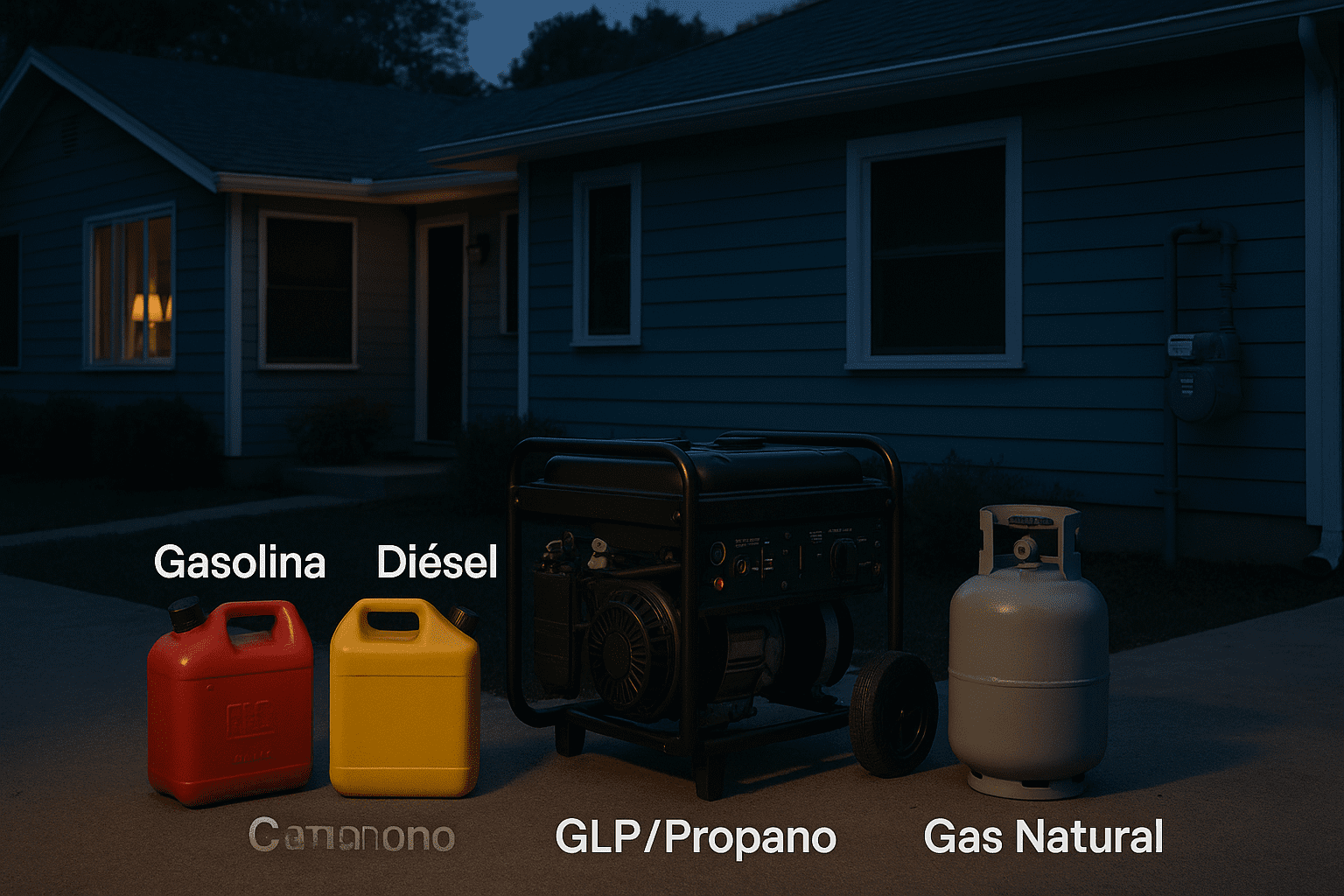
This content has been reviewed by Stevenso, an electrician with over 10 years of experience , a former foreman (team of 10 people), and two years of technical training at Salesianos Don Bosco . The goal is to help you choose the right generator fuel for home use , based on clear criteria (cost per hour, runtime, maintenance, noise, climate, and availability). Keep in mind that prices and regulations vary depending on your country/city ; for fixed gas installations, consult a certified installer and check local regulations . Throughout the article, you'll find links to supplementary guides with calculations and practical steps.
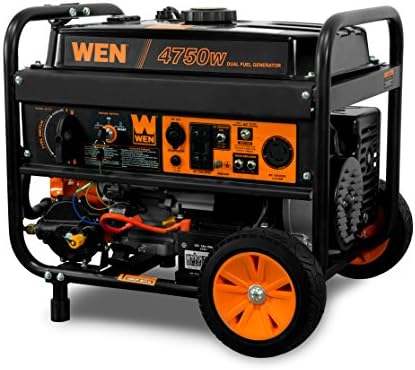
- Switch between gasoline (4750 surge watts, 3800 running watt) and propane (4350 surge, 3500 running) with the simple turn…
- Voltage easily goes from 120V to 240V, perfect for transfer switches and emergency backup
- Electric start powers the 224cc 4-stroke OHV engine with the turn of a key
Summary in 30 seconds: What's right for me based on my needs?
- Short and occasional breaks (up to 2–8 h/week)
It is usually convenient gasoline by easy start y availability Immediate. Point to watch: cost per hour something higher.
Delve deeper into consumption: Generator fuel consumption in liters per hour.
If you're worried about noise: silent generators home noise dB. - Long or frequent cuts (24–48 hours at a time or several days/month)
Rate diesel by efficiency y continuous workIt is usually noisier and requires a maintenance different (filters/injectors).
Autonomy and deposit: generator autonomy actual hours partial load.
Maintenance checklist: Generator maintenance oil spark plug filter checklist. - Cold weather (below 0 °C) or low temperature starts
LPG/propane embodies the good performance in cold weatherFurthermore, it makes the camera less dirty. You can also opt for dual fuel to alternate between gas and gasoline depending on price/availability.
Is dual fuel right for you? dual fuel generators advantages gas gasoline.
Calculate your autonomy with cylinders: generator autonomy actual hours partial load. - Do you have a natural gas network at home?
Considers gas natural by continuous supply and fewer refills (fixed installation and permits). If you're going to power critical circuits, evaluate a Automatic Transfer Switch (ATS).
What is an ATS and what types: residential ats transfer switch types. - Top priority: the lowest operating cost per hour
In loads high and sustained, diesel It is usually competitive; LPG/propane It may be convenient where the gas is significantly cheaper than gasoline. The final decision depends on your consumption/hour y local price.
Step-by-step method to estimate your $/h: Generator fuel consumption in liters per hour.
How to compare fuels: 7 practical criteria
Before choosing, define your typical usage (consecutive hours, frequency of outages, weather, and ease of refueling). These 7 criteria will give you a clear and repeatable decision:
- Cost per hour and per kWh
- What to watch: best before date of the equipment (L/h, kg/ho m³/h) and local price of the fuel.
- Rule of thumb: compare $/kWhNot only $/L.
- Step-by-step calculation guide: Generator fuel consumption in liters per hour.
- Autonomy
- What to watch: tank capacity (gasoline/diesel), cylinder weight/capacity (LPG/propane) or network flow (natural gas), and you % of load typical.
- Practical tool: Generator autonomy hours actual hours partial load.
- Maintenance
- What to look for: ignition type (spark plug vs injection), combustion cleanliness (deposits/oil), filters.
- Useful checklist: Generator maintenance oil spark plug filter checklist.
- Noise and vibration
- What to watch: dB at 7 m, “inverter” encapsulated motor type.
- Indicative comparison: silent generators home noise dB.
- Basic emissions
- What to look for: particulates and NOx (diesel ↑), relative CO₂, combustion cleanliness (gasoline/LPG cleaner than diesel; natural gas very clean).
- Note: For legal requirements, See local regulations.
- Availability and storage
- What to look for: ease of shopping in your area, useful life y security, When storing gasoline, it requires more care (stabilizer); diesel and LPG/propane are usually more stable; natural gas is 100% dependent on the network.
- Cold start and operation
- What to look for: ambient temperature and manufacturer's recommendation. propane It usually performs better at low temperatures. diesel may require supports (preheaters), and the gasoline It usually starts easily.
Petrol
- Cost per kWh: Medium–High
- Endurance: Media
- Maintenance: Simple and frequent
- Noise: Medium
- Emissions: Medias
- Storage: Easy, less stable
- Cold: Good (easy start)
Diesel
- Cost per kWh: Low-Medium
- Endurance: High
- Maintenance: Technician (filters/injectors)
- Noise: High
- Emissions: High (particulates/NOx)
- Storage: Good stability
- Cold: You may require support
LPG/Propane
- Cost per kWh: Medium (may decrease if gas is cheap)
- Endurance: Average (according to cylinder)
- Maintenance: Low-Mid (pay attention to valves)
- Noise: Medium
- Emissions: Low
- Storage: Stable (cylinders)
- Cold: Very good (propane)
Natural gas*
- Cost per kWh: Low
- Endurance: Very high (network)
- Maintenance: Low
- Noise: Medium
- Emissions: Very low
- Storage: Does not apply
- Cold: Good
| Criterion | Petrol | Diesel | LPG/Propane | Natural gas* |
|---|---|---|---|---|
| Cost per kWh | Medium–High | Low-Medium | Medium | Low |
| Autonomy | Media | High | Average (according to cylinder) | Very high (network) |
| Maintenance | Simple and frequent | Technician (filters/injectors) | Low-Mid (valves) | Low |
| Noise | Medium | High | Medium | Medium |
| emissions | Medias | High | Low | Very low |
| Storage | Easy, less stable | Good stability | Stable (cylinders) | Does not apply |
| Cold | Good | You may require support | Very good (propane) | Good |
*Requires home connection and see local regulations.
*Natural gas applies when there is a home connection ; it usually requires a fixed installation and, if you will be supplying critical circuits, consider a transfer switch (ATS).
Cost per hour and per kWh (simple method)
- Step 1 – Consumption:
- Liquids (gasoline/diesel): use consumption (L/h) from the manual to a % of load (ideal: 25/50/75/100%).
- LPG/propane: use kg / h (or lb/h).
- Natural gas: uses m³ / h.
- Step 2 – Local Price: converts to $/L, $/kg o $/m³ as appropriate.
- Step 3 – Cost per hour:
- $/h = consumption × price.
- For example: if your computer consumes C L/hy the price is P $/L ⇒ $/h = C × P.
- Step 4 – Cost per kWh:
- $/kWh ≈ ($/h) ÷ (kW_delivered).
- kW_delivered = nominal power (kW) × % of load.
- Ex.: if you operate a 3 kW at 50%, kW_delivered ≈ 1,5 kW; then $/kWh = ($/h) ÷ 1,5.
- Step 5 – Decide: Calculate the same for each fuel and compare. $/kWh.
- Support guide with formulas and templates: Generator fuel consumption in liters per hour.
Technical note: For LPG/propane, do not convert to liters; work directly in kg/h and $/kg . For gas installations (bulk LPG or natural gas), consult local regulations and work with a certified installer.
Gasoline: when is it convenient at home
Gasoline is usually the most practical option for short, occasional power outages . Gasoline generators start easily in cold weather , are compact , readily available, and refueling is simple. However, the hourly cost tends to be higher compared to diesel, and depending on the model, runtime may be limited by the fuel tank size.
Professionals
- Easy start and stable response in varied climates.
- Availability of equipment and spare parts; extensive fuel sales network.
- Formats portable y power inverter with low noise relative (according to encapsulation).
- Maintenance simple (oil, spark plug, air filter).
→ Checklist: Generator maintenance oil spark plug filter checklist.
→ Noise (dB) and quiet options: silent generators for home use, low dB noise.
Cons
- Operating cost normally higher than diesel at sustained loads.
- average autonomySmall ponds require more frequent refilling.
- The gas It loses quality over time.If the equipment becomes inactive, it is advisable stabilizer and fuel rotation.
- In heavy loads and long working hours, it can be less efficient than diesel.
Use it if…
- Your typical haircuts are from 2–8 hours and you need mobility or an easy-to-start team.
- You prioritize low noise and format compact (e.g., power inverter ).
→ Real differences between inverter and conventional. - Want a immediate solution without fixed installations.
Usage tips (practical)
- Fuel Efficiency:: uses fresh gasoline of the recommended octane rating as per the manufacturer's instructions. Avoid storing it for long periods without proper care. stabilizer.
- AutonomyCalculate your actual hours based on tank and % of loadIf the pond is small and the cut is long, plan for refills.
→ Quick method for real-time hours. - Cost per hour: estimate $/h y $/kWh Before deciding; sometimes it pays to choose an efficient inverter if you use partial loads.
→ Step-by-step calculation. - Maintenance: respects intervals of oil, clean air filter and check spark plugA well-maintained piece of equipment consumes less energy and makes less noise.
→ Maintenance checklist.
Diesel: power and efficiency for long days
Diesel is the typical choice when you need many continuous hours of power, offering better fuel economy than gasoline. Diesel equipment generally handles heavy loads and extended periods of operation better, with greater autonomy thanks to larger fuel tanks and lower specific fuel consumption.
Professionals
- Efficiency highlighted to sustained loads (low $/kWh in prolonged scenarios).
- High autonomy: larger tanks and lower consumption/hour.
- Longevity: engines designed for duty cycle demanding.
- Lower flammability of fuel versus gasoline.
Cons
- Noise and vibration generally Taller (evaluate encapsulation or location).
- Cold start may require glow plugs and suitable oil.
- Maintenance with greater specialization (fuel/water filters, injection).
- Weight and size superior in equivalent equipment.
Use it if…
- You have long or frequent cuts (24–48 hours straight or several days a month).
- You will operate near the 70-100% of the power in a regular way.
- You look for competitive operating cost in time and fewer stops to refuel.
- You are evaluating a system stationary for critical circuits (lighting, refrigerator, pumps).
→ Secure switching with ATS.
Usage tips (practical)
- Cost per hour/kWhBefore deciding, calculate your $/h and $/kWh with your consumption at actual load (not just nominal).
→ Step-by-step method. - Autonomy: combines tank capacity with your typical load percentage to estimate hours without refueling.
→ Calculation of actual hours. - Cold start: considers oil with appropriate viscosity to your climate, battery in good condition and, if the manufacturer allows it, preheater.
- Maintenance: respects intervals of air filter, fuel filter/separator, control of water in diesel and reviews of injection system.
→ Practical checklist. - Location/noiseIf noise is critical, prioritize soundproof booths and a safe distance towards inhabited areas.
→ Reference for levels and solutions.
Gas (LPG/propane): clean, flexible and favorable in cold weather
LPG /propane combines clean combustion , good availability in many markets, and outstanding performance at low temperatures (propane maintains its vaporization capacity in extreme cold). In domestic generators, it offers a practical alternative to gasoline for reducing combustion residue and extending service intervals.
Professionals
- Better performance in cold weather (propane): maintains vaporization when the temperature drops.
- Cleaner combustion than gasoline/diesel: fewer deposits in the combustion chamber and oil.
- It can contribute competitive hourly rate when gas is cheaper than gasoline in your area.
→ calculate your $/hy $/kWh. - Stable storage in cylinders; useful for long periods of non-use.
- Available on devices dual fuel (gas + gasoline) for greater flexibility.
→ Is dual fuel right for you?: Dual fuel generators advantages: gas/gasoline.
Cons
- Autonomy conditioned by the cylinderIf you undersize, you'll have frequent refills.
→ Estimate actual hours based on your load. - Some engines may require attention to valves/seats due to lower gas lubricity (according to design).
- Requires regulator and hoses suitable; for fixed installations, authorized installer y See local regulations.
Use it if…
- You live in an area of low temperatures or you foresee cold starts frequently.
- You look for less maintenance due to waste and a cleaner exhaust for domestic use.
- Do you want to flexibility with a dual fuel system that allows switching between gas and gasoline depending on price/availability.
→ Advantages of dual fuel.
Usage tips (practical)
- Size cylinders and recharge logistics according to your % of load and scheduled times.
→ Method for calculating autonomy with gas. - Installation: uses regulator and connections Recommended by the manufacturer/conversion kit; avoid DIY adaptations. For fixed installations, See local regulations and hire authorized installer.
- MaintenanceAlthough gas is less polluting, it respects changes in oil/filtersIf your engine requires it, evaluate systems for seat lubrication or reviews of valve clearance according to the manual.
→ Maintenance checklist. - Operating cost: turn your consumption into kg / h and the price in $/kg for $/h y $/kWh comparable to other fuels.
→ Step-by-step calculation guide. - Location and security: keep the cylinders in ventilated area, without heat sources, with adequate support and valves in good condition. See local regulations.
Natural gas (if you have a home gas network)
If your home has a natural gas connection , a generator adapted to this source is a convenient solution due to its continuous supply and reduced refueling . It is typically used in stationary units connected via an automatic transfer switch (ATS) to power critical circuits.
Professionals
- Continuous supplyYou do not handle drums or cylinders.
- Operating cost habitually competitive according to local rates.
- Clean combustion y maintenance more spaced out compared to gasoline/diesel.
- Orderly integration with ATS to automatically switch between mains electricity and generator.
→ What is an ATS and what types.
Cons
- Fixed installation and permissions: requires authorized installer y See local regulations.
- Minor portabilityIt's not the best option if you need to move the equipment.
- The available power depends on flow rate and pressure from the network; check with the manufacturer.
Use it if…
- Do you want to automatic backup all with critical circuits (essential lighting, refrigeration, pumps, router).
- Do you prefer forget about recharges and you have stable gas tariff.
- Your priority is continuity more than the mobility.
Usage tips (practical)
- DimensioningConfirm with the installer the flow rate (m³/h) required by the generator to your % of load typical.
→ To compare costs, convert consumption to $/h y $/kWh. - AutonomyWith natural gas there is no "tank", but there is flow limits; validate that your peak demand is covered.
→ Methodology for calculating load/hours. - MaintenanceAlthough it is clean, it respects changes of oil/filter and periodic testing of Boot to ensure that the system responds when there is a power outage.
→ Practical checklist. - SecurityInstallation and testing of tightnessaccessible valves, adequate ventilation and grounding; always See local regulations.
Dual fuel (gasoline + gas): when does it make sense?
Dual-fuel generators can run on gasoline or LPG/propane (depending on the kit or factory configuration). They offer fuel flexibility and can optimize the hourly cost by switching fuels based on price and availability. In cold climates, using propane improves starting; in emergencies, you can switch to gasoline if the gas runs out.
Professionals
- Immediate flexibilityYou choose fuel based on price/stock.
- Greater continuityIf one fuel runs out, you continue with the other.
- Cleaner combustion with gas: less residue in the chamber and oil.
- Versatile for seasonality: propane in winter, gasoline in temperate periods.
Cons
- Initial cost somewhat larger and with more components (valves, hoses, regulator).
- Some engines require attention to valves/seats when they operate for many hours using gas.
- Installation kits must respect manufacturer's manual; for fixed gas installations, authorized installer y See local regulations.
Use it if…
- Do you want to ensure autonomy in long cuts (you combine cylinders + drums).
- You look for optimize $/h choosing fuel according local price.
- You operate in Cold weather and you value the start with propaneBut you keep gasoline as a backup.
→ Advantages and scenarios.
Usage tips (practical)
- Plan by the hour: estimate your autonomy with cylinders and tank to determine how many spare parts you need.
→ Calculation of actual hours. - Compare costs with proper numbers: calculate $/hy $/kWh en gasoline and in GLPDecide with data.
→ Step-by-step method. - MaintenanceFollow the intervals in the manual; if you operate for many hours in gas, check out valve clearance and state of seating when applicable.
→ Practical checklist. - Safety and assembly: uses regulator y hoses approved, verify tightness and places cylinders in the area ventilatedFor fixed gas installations: authorized installer y See local regulations.
Cold start-up and operation: climate-dependent decisions
Cold weather affects fuel, lubrication, and the battery . Choosing the right fuel (and preparing the equipment) prevents starting problems and loss of power.
Quick rules for fuel
- Petrol
- Suelen easy start in low temperatures, but use oil with appropriate viscosity (Consult the manual, e.g., 5W-30 synthetic for winter if the manufacturer allows it).
- Check out spark plug condition, air filter y battery (in electric start).
- If the equipment stops, use fresh gasoline y stabilizer.
- Calculation of hours and recharging needs on cold days: Generator autonomy hours actual hours partial load.
- Diesel
- At low temperatures it may require glow plugs/preheating and winter oil.
- Employ winter diesel (or antifreeze additives) depending on local availability.
- Keep the battery in excellent condition; a weak battery in cold weather makes starting difficult.
- Estimate the cost per hour in continuous operation.
- LPG/Propane
- Propane It maintains better the cold vaporizationIt is the most consistent option in temperatures below zero.
- Check regulator and that the cylinder has sufficient capacity to maintain gas flow at low temperature.
- For dual fuel, a typical strategy is start with propane and alternate if the price justifies it.
- Natural gas
- Stable start if the flow rate/pressure The network is suitable; check the manufacturer's specifications.
- In systems with ATS, Program periodic tests cold start.
Pre-start checklist in cold weather
- Oil: use the recommended viscosity for low temperatures.
- BatteryFull charge; clean terminals. Consider maintainer if the equipment remains inactive for long periods.
- Fuel Efficiency:Propane for intense cold; "winter" diesel or additives; gasoline fresh with stabilizer if applicable.
- AdmissionClean filter; avoid ice at the entrance (Place the equipment under an open/ventilated roof).
- Location: firm platform, ventilation adequate, Escape directed away from doors/windows. See local regulations.
- Load: starts without charges connected and connect them gradually to the 5-10%, going up to your % of target load.
- If you need to size autonomy at that percentage of load; Generator autonomy hours actual hours partial load.
Good operating practices
- Test cycles: runs the generator 15–20 mins every 2–4 weeks in cold weather to maintain lubrication and check start-up.
- Cooling: after prolonged use, it leaves cool before turning off to protect the turbo (if applicable in diesel) and stabilize temperatures.
- Top-up plan: when cold, consumption may vary additional losses (thicker oil, fans, etc.). Anticipate $/h and logistics.
Real autonomy: tank (L) or cylinder (kg) vs hours at 25/50/100%
The autonomy depends on two pieces of information from your generator's manual :
- Consumption to a % of load (gasoline/diesel in L / hrLPG/propane in kg / h; natural gas in m³ / h).
- Capacity from the deposit (L) or of cylinder (kg).
Base formula
- Liquids (gasoline/diesel):
Horas = Capacidad del tanque (L) ÷ Consumo (L/h) - LPG/propane:
Horas = Contenido del cilindro (kg) ÷ Consumo (kg/h) - Natural gas: There is no "tank"; it validates that the flow rate (m³/h) The network covers your % of load objective continuously.
Recommendation: always calculate in 3 load scenarios (25% / 50% / 100%) and leave a safety margin for start-ups, peaks and environmental conditions.
Step by step (applicable to any fuel)
- Identify your typical loadAdd up the wattage of the critical equipment and define your % of load habitual.
- Look in the manual the generator's consumption 25/50/100% (most people publish it).
- Apply the formula depending on your fuel.
- Add the margin (reserves, starts, weather, fuel aging).
- Plan rechargesIf the autonomy is less than the probable duration of the outage, define number of recharges o cylinders additional.
Guide with examples and template for actual hours: generator autonomy actual hours partial load.
Mini-calculation table (fill in with the data from your manual)
Generic example (replace “manual consumption” with your values):
| % of load | Manual consumption | Capacity / Contents | Estimated hours |
|---|---|---|---|
| 25% | L / hr o kg / h | L o kg | Capacity ÷ Consumption |
| 50% | L / hr o kg / h | L o kg | Capacity ÷ Consumption |
| 100% | L / hr o kg / h | L o kg | Capacity ÷ Consumption |
If your system is an inverter model , consumption at partial loads is usually more favorable than with a conventional system. With LPG/propane , ambient temperature and the regulator affect gas delivery; size the cylinder according to the flow rate required by your load percentage.
Quick tips for fuel
- Gasoline/DieselSmall tanks improve portability but require more top-ups; for long cuts, prioritize equipment with larger deposits or plan drums.
- LPG/Propane: defines the cylinder capacity based on your target hours; check compatibility of regulator and hoses with the generator. See local regulations for fixed installations.
- Natural gasConfirm with the installer that the flow rate and pressure They cover your consumption peak load %; program periodic tests if you use ATS.
To complete the economic analysis, convert your consumption to $/h and $/kWh (using local prices).
How much does it cost per hour? (and per kWh) using local prices
To compare fuels without bias, calculate $/h and $/kWh using your actual consumption (depending on load) and local prices . The methodology is simple and repeatable.
Data you need
- Generator power (kW) y % of load to which you usually operate.
- Consumption at that load (from the manual):
- Gasoline/diesel in L / hr.
- LPG/propane in kg / h.
- Natural gas in m³ / h.
- Local price: $/L, $/kg o $/m³.
If you are still unsure of your charge percentage or usage hours, refer to : generator autonomy, actual hours, partial load.
Key formulas
- Cost per hour
$/h = Consumo_hora × Precio_unitario
(Ex.: L/h × $/L, kg/h × $/kg, m³/h × $/m³) - Effective power
kW_entregados = Potencia_nominal (kW) × % de carga - Cost per kWh
$/kWh = ($/h) ÷ kW_entregados
Step-by-step guide and conversion examples: generator fuel consumption liters per hour.
Guided example (fill in with your information)
- Team: X kW
- Typical load: AND % →
kW_entregados = X × (Y/100) - Local prices: gasoline $A/L, diesel $B/L, GLP $C/kg, natural gas $D/m³
- Consumption (from the manual) at that %: gasoline g L/h, diesel d L/h, LPG p kg/h, GN n m³/h
Calculate:
- Gasoline:
$/h = g × A→$/kWh = (g × A) ÷ kW_entregados - Diesel:
$/h = d × B→$/kWh = (d × B) ÷ kW_entregados - LPG/Propane:
$/h = p × C→$/kWh = (p × C) ÷ kW_entregados - Natural gas:
$/h = n × D→$/kWh = (n × D) ÷ kW_entregados
Practical tip: Do the same calculation at 25% / 50% / 100% load. In many cases, diesel is more economical under high and sustained loads; LPG/propane can be competitive if its local price is favorable; gasoline is convenient for short trips.
Sensitivity (to decide with certainty)
- Fuel price ±10–20%: observe if the order changes.
- Load variation: many generators power inverter They improve consumption under partial loads.
- Logistics: cost and time of recharge (cylinders/drums) also factor into your decision.
Dual fuel: decide with numbers
If your equipment is dual fuel , calculate $/kWh for gasoline and for LPG and alternate according to the most convenient one each week/month (price and availability).
Maintenance compared by fuel (checklist)
A well-maintained generator consumes less fuel, makes less noise, and lasts longer . Always adjust maintenance intervals according to the manufacturer's manual and keep a log of operating hours . Basic guide with tasks.
Gasoline — Essential Checklist
- Oil and filter (if applicable): Change according to the hours indicated in the manual; check the level before each use.
- Spark plug: Clean/adjust or replace if there are hard starts, spark failures or abnormal consumption.
- Air filter: Clean/renew to avoid overconsumption and loss of power.
- Fuel type: uses fresh gasoline of the recommended octane rating; if the equipment will be idle, add stabilizer and start it periodically.
- Carburetor/injection: If there is jerking or irregular starting, check for dirt in the fuel pumps or sensors depending on the model.
- Cooling and casing: Keep grilles clean and the muffler unobstructed.
→ Extended checklist.
→ Noise (diagnosis and improvements).
Diesel — Essential Checklist
- Fuel filter and water separator: Inspection and purging according to the manual; water in diesel affects starting and can damage the system.
- Injection system: Check pressure/atomization at a technical service if you notice smoke, high consumption or irregular vibration.
- Oil and filter: Change at the indicated intervals; use a viscosity appropriate for your climate.
- Air filter: Keep clean to avoid overloading and excessive consumption.
- Battery and preheating: Check battery status and components cold start if your climate requires it.
→ Autonomy calculation for planning maintenance shutdowns.
→ Cost per hour (to schedule services without surprises).
LPG/Propane — Essential Checklist
- Oil and filter: Although gas makes less mess, it still adheres to the same intervals as the manual.
- Valves and seats (depending on the engine): If you operate for many hours using gas, check valve clearance and seat wear according to the manufacturer's recommendations.
- Regulator and hoses: inspects cracks, seals and tightness with soapy solution; replaces aged components.
- Cylinders and location: vertical support, ventilated area and away from heat/ignition; validate cylinder test date.
- Air filter: Keep it clean; a poor mixture due to clogging can raise the temperature.
→ Autonomy guide with cylinders and % of load.
→ If it is dual fuel, Also check the gas stations.
Natural gas — Essential checklist
- Oil and filter: Follow the intervals in the manual (many systems extend periods for cleaner combustion).
- Gas supply: check pressure/flow rate and that regulator meets specifications; leak inspection of connections.
- Periodic testing with ATS: SCHEDULE automatic starters under no-load and gradual load conditions to ensure a real response.
- Admission and ventilation: Keep grates clean and the area free of obstacles and moisture.
→ Regarding secure switching.
→ Neutral method to compare $/h and $/kWh with your rate.
Signs to request technical service
- Prolonged starts or failed, unusual smoke, power loss, high consumption compared to your average, vibes atypical, gas/fuel smells, escapes visible.
- In teams with many hours of service or that operate in Extreme weather, preventive inspection program.
Safety first : Place the generator outdoors , with the exhaust pipe away from doors/windows and grounded according to the manual. For gas installations (bulk LPG or natural gas), use a certified installer and consult local regulations.
Noise and vibration: what you can expect
Noise levels depend more on the equipment design than on the fuel itself. Generally speaking, diesel engines tend to be noisier due to their architecture and operating conditions; gasoline and encapsulated inverter engines are quieter; operating on LPG/propane does not eliminate mechanical noise (although it does reduce combustion byproducts).
Factors that increase or decrease noise
- Generator type: The power inverter With casing and rpm control, they usually sound quieter than conventional open-back drums.
→ Practical comparison. - Rotation and loading regime: more load means more rpm (and more noise) in models without eco control.
- encapsulatedSoundproof booths and well-designed airways dampen the sound.
- LocationHard surfaces and corners reflect light; an open and firm location helps to "disperse" the noise.
Vibration: how to control it
- Level and firm baseAvoid placing it on unstable surfaces.
- Silent blocks: check that the insulators Make sure they are intact; replace them if you see cracks.
- ScrewsTighten engine/chassis fixings according to the manual to prevent humming.
- MaintenanceA dirty air filter, worn spark plug, or incorrect mixture can increase vibration/noise.
→ Checklist.
Good practices for reducing perceived noise
- Distance and orientationMove the equipment away from populated areas and orient the Escape in the opposite direction to windows/doors.
- Simple barriers: place the generator behind a existing wall or within a ventilated shed (respecting airflow) usually helps.
- Cables and chargingAvoid undersized extension cords that "choke" the equipment; connecting the load gradually reduces noise spikes.
- If the noise is critical: values a inverter model or a version with soundproof booth.
→ Guide to typical levels and recommendations.
Home security and storage
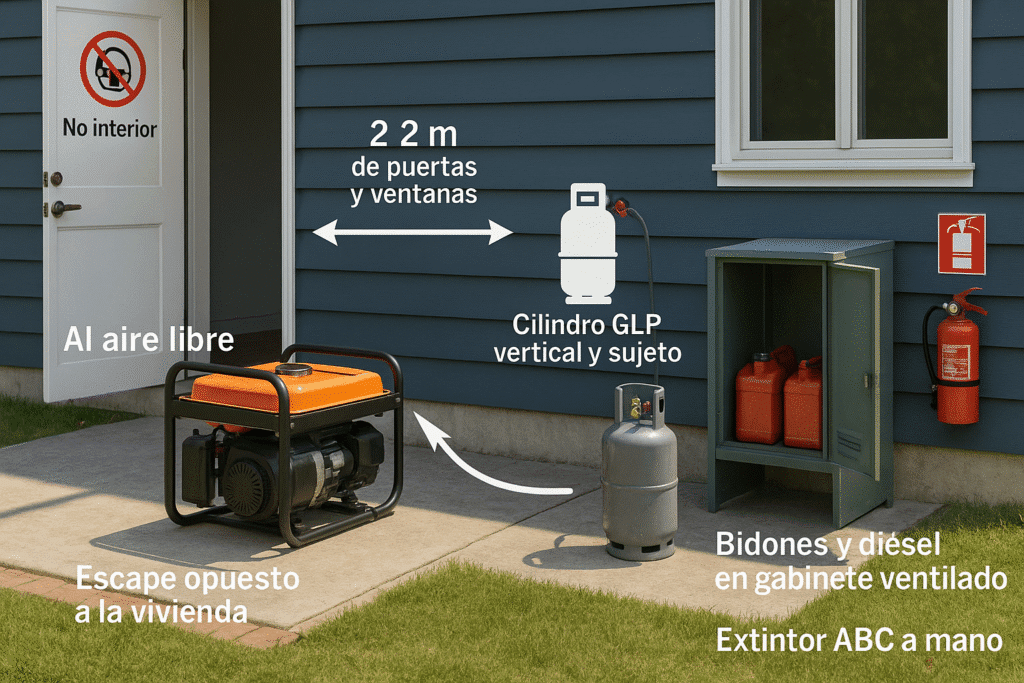
The priority is to avoid carbon monoxide (CO) , fire hazards , and leaks . Always place the generator outdoors , on a firm, well-ventilated surface , with the exhaust directed away from doors and windows. For gas installations and fixed electrical connections, consult local regulations and hire a certified installer.
General principles (apply to any fuel)
- Never operate indoors (nor in cellars, enclosed corridors or garages).
- Ventilation permanently; keep the equipment vents clear.
- Safety distance in front of combustible materials and ignition points.
- Extinguisher by hand (ABC classification) and emergency plan (fuel and electricity cut-off).
- Grounding and cables in good condition; avoid undersized extensions.
→ Maintenance checklist that helps prevent incidents.
Gasoline and diesel — Storage and handling
- Certified containers y signage clear; keep them closed and away from heat and sparks.
- LifespanRotate the fuel; if the equipment becomes inactive, consider stabilizer for gasoline and follow the supplier's recommendations for diesel.
- Safe transfer: uses funnels/nozzles appropriate; clean up spills immediately.
- LocationStore drums in a safe place ventilatedoutside of inhabited areas and out of reach of children.
- ReplenishmentTurn off the generator and leave cool before refueling.
LPG/Propane — Cylinders and fittings
- Cylinders in a vertical position, subjects and in ventilated areaAvoid prolonged direct sunlight and heat sources.
- Regulator and hoses approved; check tightness with soapy water (never with flame).
- Valves accessible and in good condition; respect test dates of the cylinder.
- Transport/storageAvoid bumps and falls; do not store large quantities in inhabited spaces.
- For fixed installations (bulk or piped), authorized installer y See local regulations.
→ Calculation of autonomy with cylinders and % of load.
Natural gas — Installation and testing
- Requires dedicated line, regulator and verification of pressure/flow rate according to the generator.
- Performs leak tests y periodic startup testsideally with ATS.
→ What is an ATS and how is it integrated?
Safe electrical connection to the home (key idea)
- No feed back into the network using improvised sockets.
- If you're going to power circuits in the house, use transfer switch (ATS/manual switch) professionally installed and See local regulations.
- For direct loads, use extension cords with adequate capacity and protección weatherproof.
Warning signs (act immediately)
- Smell of gas/fuel, escapes visible, smoke unusual, sparks, overheating o CO alarmCut off fuel/power, ventilate, and contact technical support.
Practical cases (3 clear scenarios)
Scenario 1 — Department with brief and sporadic power outages (2–8 h)
Profile: priority to low noise, easy start y mobility; occasional use.
Typical recommendation: gasoline, ideally power inverter due to lower noise and better consumption at partial loads.
How to decide with data:
- Estimate your % of load (only the essentials: lighting, router, notebook, TV).
- Calculates $/hy $/kWh with your actual consumption.
- projects hours of autonomy with the tank and your % charge.
Useful extras: If noise is key, check dB levels and enclosures.
Brief checklist: gasoline fresh, stabilizer if the equipment will be inactive, clean air filter and spark plug in good condition.
Scenario 2 — House with long or frequent power outages (24–48 h), includes pump and cooling
Profile: you need many hours in a row, good autonomy y efficiency under sustained load.
Typical recommendation: diesel with a larger reservoir; if you will be powering domestic circuits, consider ATS.
How to decide with data:
- Identify critical loads (refrigerator, pump, lights, router) and your % of load average and peak.
- Calculates $/hy $/kWh with your local diesel price and fuel consumption from the manual:
https://domesticlife.info/consumo-combustible-generador-litros-por-hora/ - projects autonomy continues according to tank size and % of load.
Secure home connection.
Key maintenance (filters/water decanter, injection).
Scenario 3 — Cold zone (below 0 °C) with intermittent outages and mixed logistics
Profile: el cold start It's critical; sometimes it's best to alternate depending on availability/price.
Typical recommendation: LPG/propane for its good performance in cold conditions; option dual fuel to add flexibility (propane for cold use, gasoline as backup).
How to decide with data:
- Dimensions cylinders (kg) based on target hours and % of load.
- Compare $/kWh en GLP y gasoline with your local prices to switch around intelligently.
Advantages and precautions of dual fuel.
Safety and maintenance (regulator/hoses, valves).
Final selection tip: if you're hesitating between two options, calculate the $/kWh for both with your actual load percentage , verify autonomy for the duration of your outages, and prioritize the setup that provides reliable continuity (and, if applicable, with ATS ).
You may also like
- How to estimate consumption and cost per hour step.
- actual autonomy depending on the tank or cylinder and the % of charge.
- Dual fuel at home: advantages, when it's convenient and precautions.
- Basic maintenance to reduce consumption and noise.
- Silent generators: noise levels (dB) and options.

I'm Stevenson, better known as Steve the Poet . I'm a poet and writer, and I own a digital marketing agency , bignegro.com . I'm also an electrician with over 10 years of experience. I studied electricity at Salesianos Don Bosco and worked my way up from assistant to foreman of a 10-person crew. Today, I lead a small business.